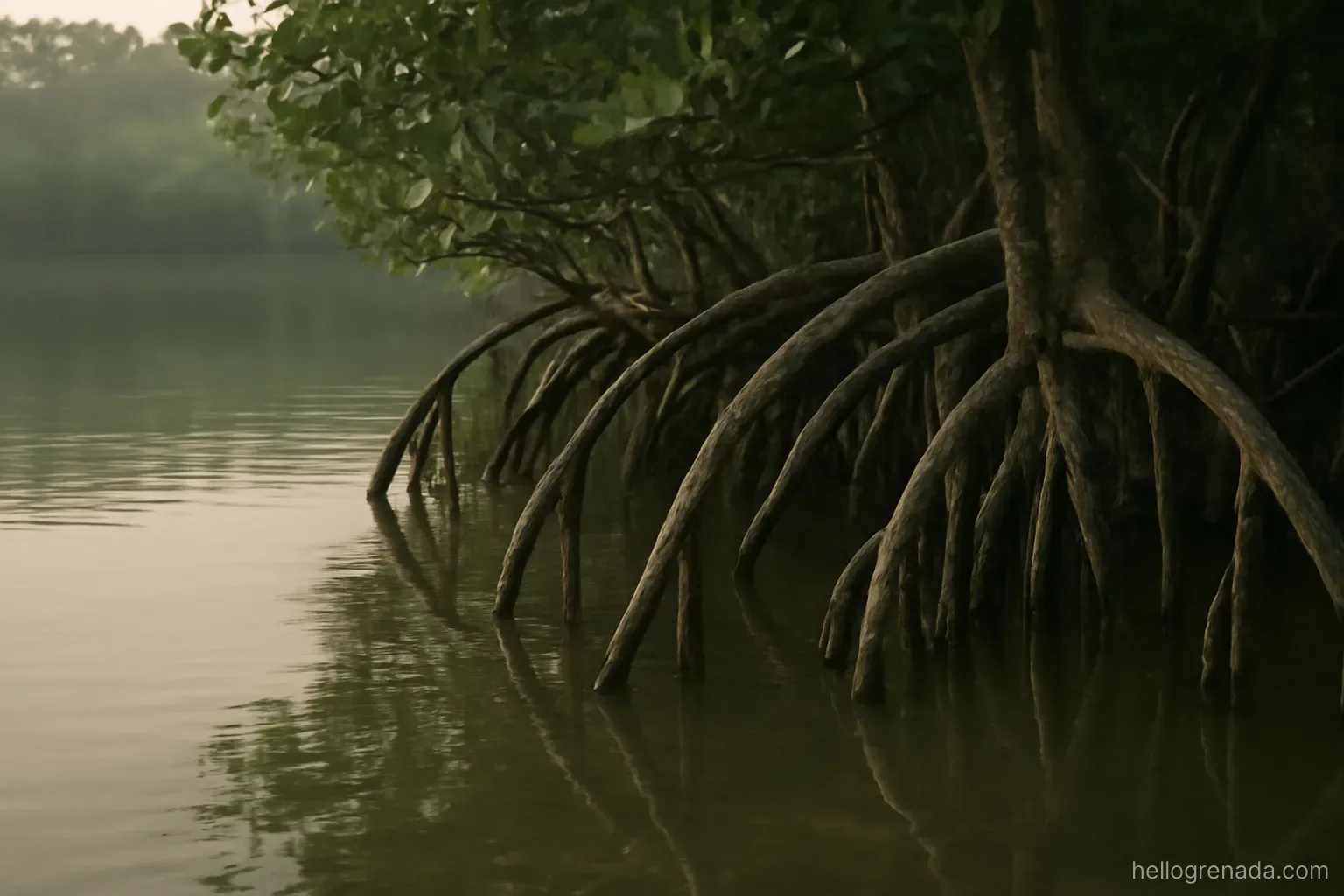
Nobody puts a mangrove on a postcard. They are muddy, tangled, and among the most alive places on any tropical coast — and on a small island they are what makes the fishing good and the beaches stay put.
They are also wonderfully quiet, which after a few days of sun and sea is its own attraction.
| What they are | salt-tolerant trees rooted in tidal shallows |
|---|---|
| Why they matter | nursery for fish, coastal protection |
| Best way to see them | kayak, paddleboard, or a quiet walk |
| Best time | early morning, dead calm |
Why they matter
Three jobs, all of which affect the parts of the island visitors do come for:
They are a nursery. Enormous numbers of young fish shelter in the roots before moving out to the reef. No mangroves, fewer fish on the reef — the two are directly connected.
They hold the coast together. The root systems trap sediment and absorb wave energy, which is why coastlines with mangroves lose far less ground in a storm.
They filter. Runoff from the land passes through them before reaching the reef, and coral does badly with sediment.
Which is the short version of why they are protected in most of the region, and why an unspectacular tangle of trees is worth more to the island than the view it blocks.
How to spend time in one
- By kayak or paddleboard — quiet, shallow-draft and the only way into the channels
- On a small guided boat, where one exists
- On foot along the edge, at low tide
- Sitting still at the margin, which is genuinely the best method
Go early. Mangroves are at their best in the flat calm of the first hours — reflections perfect, birds active, water still enough to see straight down into the roots.
Take repellent. This is exactly the habitat mosquitoes like, and dawn is exactly the time.
What lives there
- Juvenile fish in clouds among the roots
- Herons and egrets, standing motionless at the edge
- Crabs, everywhere, once you start looking
- Oysters growing directly on the roots
- Kingfishers and small waders
- Occasionally a ray, sliding through the shallows
The trick is the same as with snorkelling: stop moving and wait. A mangrove looks empty for two minutes and then does not, once everything that hid from your arrival decides you are furniture.
Lagoons and sheltered water
Related and equally overlooked. Where a bay is enclosed enough to stay calm regardless of what the sea is doing, you get:
- Reliably flat water, which is ideal for a first paddleboard attempt
- Warm shallows that suit small children far better than open beach
- Seagrass beds, which look like nothing and are where turtles feed
- Boats at anchor, and the small working life that goes with them
The seagrass point is worth knowing. Turtles are far more likely over seagrass than over reef, because that is where the food is — so the unremarkable green shallows are the place to look, not the pretty coral.
If you find one, keep your distance, do not chase it, and stay out of its path to the surface. It needs to breathe.
A quiet morning, properly
If you want one genuinely restful morning in the week, this is it:
- Be at the water by seven
- Take repellent, water, and something to sit on
- Paddle or walk twenty minutes in, then stop
- Stay still for half an hour
- Come back before the heat arrives
It costs nothing, requires no booking, and it is the part of the trip people are often most surprised to have loved.
Frequently asked questions
Why do mangroves matter to visitors?
They are the nursery for reef fish, they hold the coastline together in storms, and they filter runoff before it reaches the coral.
When is the best time to visit one?
Early morning, in flat calm — but take repellent, since that is exactly the habitat and the hour for mosquitoes.
Where are turtles most likely?
Over seagrass beds rather than coral, because that is where they feed — the unremarkable green shallows, not the pretty reef.
How do you see more wildlife?
Stop moving and wait. A mangrove looks empty for two minutes and then does not.