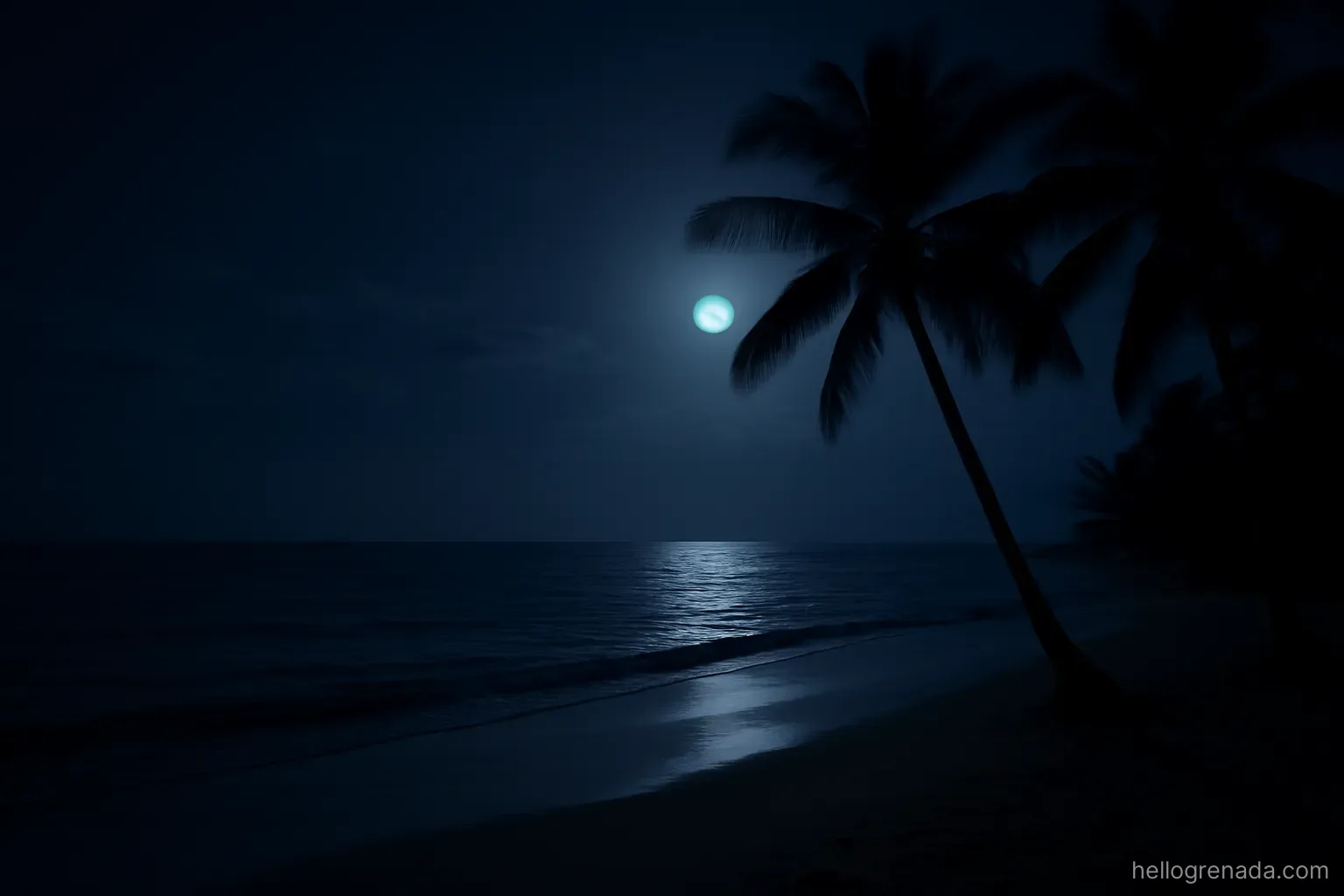
Near the equator the light goes quickly. There is barely any dusk — it is bright, then it is dark, and it happens at roughly the same time all year.
Most visitors treat that as the end of the day. It is more interesting than that.
| Sunset | around six, all year, and fast |
|---|---|
| Sound | frogs and insects, immediately and loudly |
| Sky | very dark away from towns |
| Worth doing | being outside for it at least twice |
How fast is fast
From full daylight to needing a torch takes about twenty minutes. There is no long golden evening.
What that means practically:
- Finish any walk with an hour spare. Being caught on a forest trail at dusk is a genuine problem
- Carry a torch or a charged phone if you are out late, even in town
- Plan sunset watching for around five thirty, not later
- Beaches empty quickly after dark
The first is the one that matters. The interior goes properly dark under the canopy, and a trail that was obvious at four is not obvious at six.
The sound
The thing nobody warns you about, and one of the best parts.
Within minutes of dark, the frogs start. Then the insects. On a still night, in a place away from traffic, it is genuinely loud — a wall of sound that goes all night and that most visitors find they sleep better in after a night or two.
If you are somewhere rural, sit outside for half an hour and just listen. It is free and it is one of the things people remember.
The sky
A small island with limited light pollution gives you a night sky most visitors have not seen at home.
- Get away from any light source, even a small one
- Allow twenty minutes for your eyes to adjust, and do not look at your phone
- A beach or a hillside facing away from town is ideal
- Cloud cover matters more than moon phase for most nights
- The tropical latitude shows you constellations that are low or invisible from Europe and North America
The second point is the one people skip. Checking your phone resets your night vision completely, and the difference between adjusted and unadjusted eyes is not subtle.
What moves at night
- Land crabs in numbers, crossing roads and paths
- Bats, including fruit bats around flowering trees
- Frogs, tiny and extremely loud
- Turtles nesting on certain beaches in season
- Bioluminescence in the water occasionally, which is startling the first time
On turtles: nesting is a serious business and there are rules for good reason. Go with an organised group where one operates, never use white light near a nesting beach, and keep well back — a disturbed female will turn around and go back to sea without laying.
Hatchlings navigate by light on the horizon. A torch or a phone screen sends them the wrong way, and they do not get a second attempt.
Evenings, practically
- Restaurants close earlier than in Europe — eating at nine may be too late
- Book weekend evenings at popular places
- Roads are dark and winding; driving at night needs more care and more time
- Take repellent for eating outdoors, dusk being the peak hour
- A light layer is welcome once the breeze picks up
The first catches people out most nights of the week. Working out where you are eating before dark, rather than wandering to find somewhere at eight thirty, is the whole solution — and if in doubt, ask locally in the afternoon.
Frequently asked questions
How quickly does it get dark?
About twenty minutes from full daylight to needing a torch, with almost no dusk, at roughly the same time all year.
What is the loudest surprise?
The frogs and insects, which start within minutes of dark and continue all night — most visitors end up sleeping better for it.
How do you see the night sky properly?
Get away from light, then wait twenty minutes without looking at your phone — checking it resets your night vision entirely.
What are the rules near nesting turtles?
Go with an organised group, keep well back, and never use white light — hatchlings navigate by the horizon and a torch sends them the wrong way.