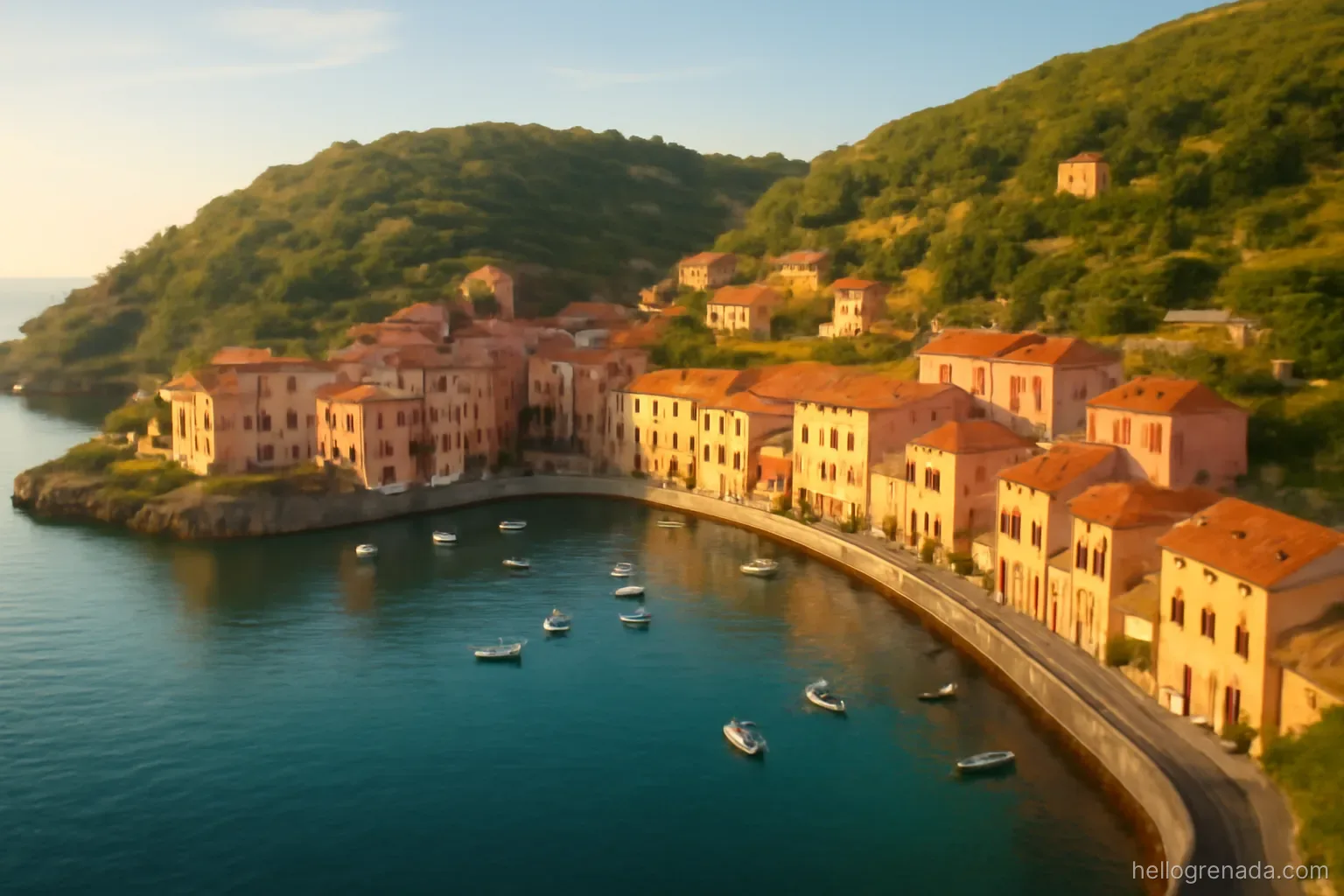
The capital is small, steep and built around a natural harbour, and it works best as a walking day rather than a list of sights.
Start at the market, walk uphill, look at the view, come down for lunch. That is most of it, and it is a good day.
| Best start | the market, early |
|---|---|
| Getting there | bus — parking is difficult |
| Terrain | very steep in places |
| Closes | early, and quiet on Sunday |
Start at the market
Go early, on a busy market day, and give it an hour rather than ten minutes.
- Spices, better and cheaper than anywhere else, as covered in the material on the Spice Isle
- Fruit and vegetables you will not recognise — ask
- The noise and the pace, which is the point
- Small notes, and greet every seller you speak to
- Ask before photographing anyone or their stall
The market is where the town is most itself. Buy something, talk to someone, and take your time — a rushed market visit gets you a bag of spice and none of the experience.
The harbour
The town wraps around it, and it is a working harbour rather than a marina:
- Fishing and cargo boats alongside visiting yachts
- The waterfront walk, which is short and pleasant
- Ferries to the sister islands departing
- Cafes and bars along the water
Sit somewhere with a view of it for half an hour. A working harbour is quietly entertaining in a way a leisure marina is not — things are being loaded, argued about and repaired continuously.
Uphill
The town rises steeply, and the effort is repaid:
- Old fortifications above the harbour, with the view that explains the town's whole geography
- Historic churches, some of them still bearing the marks of past storms
- Colonial-era streets with their steep steps and narrow passages
- The view over both sides, harbour and open sea
Take the climb slowly and early. Steep stone steps in midday heat are the reason people say they found the town tiring — done at nine in the morning, it is a pleasant twenty minutes.
Practical notes
- Come by bus. Parking is genuinely difficult and the bus drops you centrally
- Wear proper shoes — the steps and steep pavements are not for flip-flops
- Shops close early, and around midday in some cases
- Sunday is very quiet — not a good day for this
- Cash for the market and small shops
- Water and a hat, since there is less shade than on a beach
The first is worth following. Driving into a steep, narrow harbour town and looking for a space is a waste of an hour that the bus solves for a very small fare.
Eating
Lunchtime, as always here, is when the good food is:
- Small local places near the market, busy at midday
- Roti for a quick and good meal
- Waterfront restaurants, pleasanter for the view than the value
- Fresh juice from the market in the morning
Ask someone at the market where to eat. The answer will be somewhere five minutes away that you would never have found, which is the pattern everywhere on this island.
Making a half-day of it
If you are here on a cruise call or short on time:
- Market first, an hour
- Waterfront walk, half an hour
- Up to the fort for the view, an hour with the climb
- Lunch somewhere local
- Back down
That is a genuinely good half-day, and it beats a coach tour covering three times the ground. One town seen properly on foot is worth more than half an island seen through a window.
Frequently asked questions
How should you get to the capital?
By bus. Parking in a steep narrow harbour town wastes an hour that a small bus fare solves.
When should you do the climb?
Early. Steep stone steps in midday heat are why people call the town tiring — at nine in the morning it is a pleasant walk.
Where should you eat?
Ask at the market. The answer is usually somewhere five minutes away that you would never have found.
What is the best short version?
Market, waterfront, fort for the view, then a local lunch — better than a coach tour covering three times the ground.