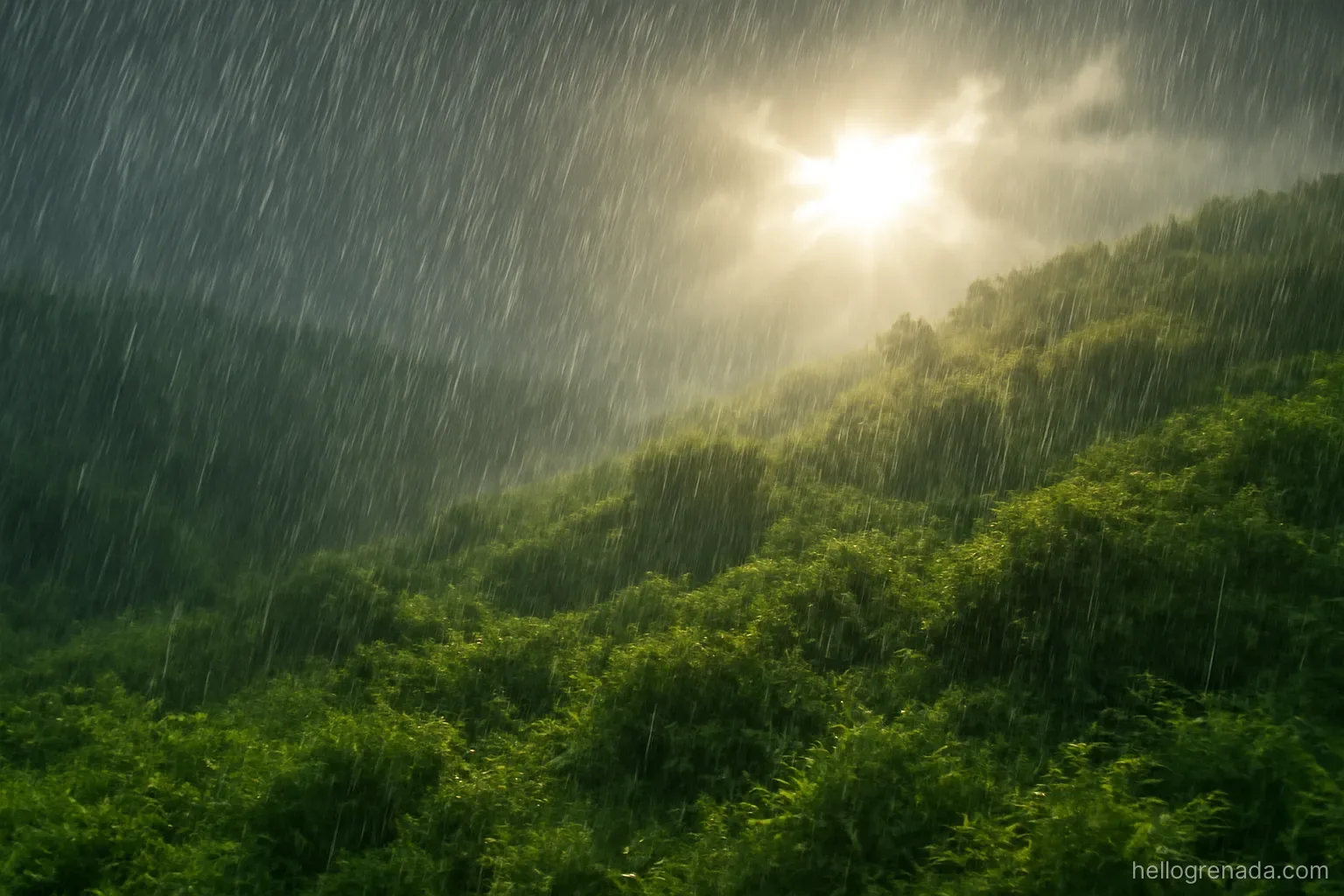
Ask about the seasons here and you will get two answers: the dry one and the wet one. Both are true and neither prepares you for how little practical difference it makes to a holiday.
Tropical rain is not what people from temperate countries picture when they hear the word.
| Drier months | roughly January to May |
|---|---|
| Wetter months | roughly June to December |
| Typical rain | short, heavy, then gone |
| Temperature | warm all year, little variation |
What rain actually does here
It arrives fast, falls hard, and stops. Twenty minutes later the road is steaming and the sky is blue. Then it may do it again in the afternoon, or not at all.
What this means for a day out:
- You shelter and wait rather than cancel
- It is warm rain, so getting caught in it is not unpleasant
- The light afterwards is the best of the day
- Everything is greener, which is most of why the island looks the way it does
The visitors who have the worst time in the wet season are the ones who built a rigid schedule. The ones who planned loosely barely notice which season they came in — they simply had coffee for half an hour at an unplanned moment.
What the seasons genuinely change
Rather than the rain, these are the differences worth planning around:
Crowds and prices. The dry months are the busy months. Beaches are fuller, accommodation costs more, and popular places need booking. The wetter months are quieter and cheaper — noticeably so.
The sea. Calmer and clearer in some months than others, which matters if diving or snorkelling is a main reason you are coming.
What is happening. The island's calendar has its own rhythm — the big August festival period, sailing events, harvest seasons. If you want to be here for something specific, that decides your dates far more than rainfall does.
Hurricane season. Officially June to November across the region. Grenada sits at the southern end of the belt and is less frequently affected than islands further north, but it is not immune, and this is a real thing to be aware of rather than dismiss. Travel insurance that covers weather disruption is worth having for a trip in these months, and it costs very little.
How the days are shaped
More useful than the season, honestly:
- Mornings are the best part of every day — cool, clear and quiet
- Midday is hot, and the sun is stronger than it feels with a sea breeze
- Late afternoon softens and is the nicest time to be on a beach
- Dark comes early and fast, around six, all year
That last point catches out more people than the rain does. There is very little twilight — the light goes quickly, so a walk or a hike planned for late afternoon needs to be finished earlier than you would expect at home.
So when should you come?
Honestly: whenever you can. If you have a free choice and want quiet and value, the shoulder months either side of the dry season are the sweet spot — decent weather, fewer people, better prices.
If you want a specific festival or the calmest sea, let that decide instead.
And if your dates are fixed by work or school, come anyway. Nobody has ever ruined a Caribbean holiday by arriving in the wrong month — they ruin it by scheduling every hour of it.
Frequently asked questions
How long does rain usually last?
Typically about twenty minutes — heavy, then gone, with the best light of the day afterwards.
What really differs between seasons?
Crowds and prices more than weather. The dry months are busier and dearer; the wetter months are quieter and noticeably cheaper.
Should hurricane season put you off?
Not necessarily — Grenada sits at the southern end of the belt and is less often affected, but insurance covering weather disruption is worth having.
What catches visitors out more than rain?
How fast it gets dark. There is little twilight, so late-afternoon walks need to finish earlier than you would expect at home.